By Janya Dieringer, Johnson Senior High School, Ben Aviles, The Blake School, and Trudy Neequaye, Wayzata High School
Every day, at 11:30 a.m., Dah Htoo leaves school.
He drives six miles north to the Finishing Trades Institute of the Upper Midwest. When he arrives, he is eager to get to work.
A senior at Johnson Senior High School on the east side of Saint Paul, Htoo participates in the Finishing Trades program, which allows students to gain experience in the finishing trades while earning high school credit.
“Right now, we’re doing drywalling,” Htoo said. “We do the process how somebody would do it if they were [working in the trades].”
Htoo is not considering a college education at the moment. He said he has never been interested in an academic career path. At one point in high school, he thought about learning a trade but was unaware of the opportunities available to him.
Then one day, Mary Voigt, Career Pathway Coordinator at Johnson Senior High School, who was preparing to lead students on a field trip to the Finishing Trades Institute, caught Htoo in the hallway skipping a class. She invited him along.
Voigt said right before the pandemic, she began to realize the importance of accessing alternative [to college] career pathways.
“It was really clear that families [whose kids] were attending Johnson didn’t see any value in school,” she said. “I started to think: Why would they care about school? What are we offering?”
Students in Johnson High’s program may take courses in health, engineering, education, and business. The program is part of the nationwide Career and Technical Education system, commonly known as CTE.
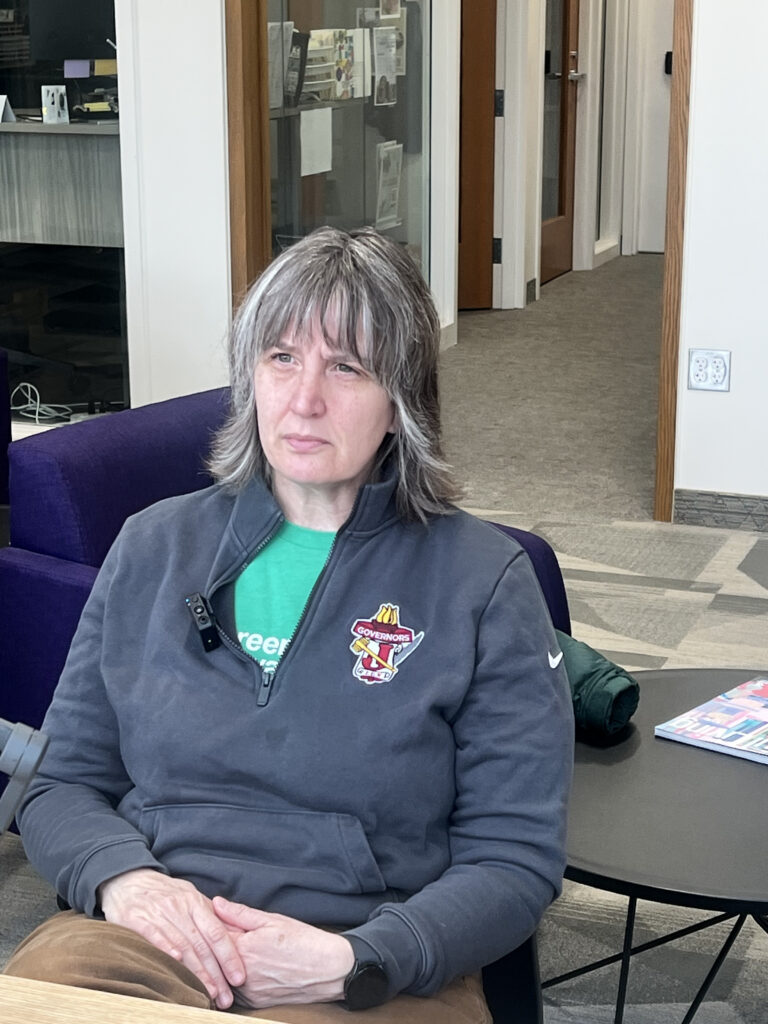
Voigt said CTE “incorporates ways for students to get credentials or potentially work experience into their school day.” She said the program shows school can move students toward career goals “as opposed to just being a series of hoops that [they] have to jump through.”
Some Minnesota lawmakers believe CTE programs, like the one Htoo attends, need more funding. An active bill currently in committee, HF 1001, would increase the amount of state funding school districts receive to support CTE programs. The bill has bipartisan support
Rep. Bianca Virnig (DFL – 52B), a Democrat from the Twin Cities suburbs, authored the bill. She said the goal is “to get those young people to make it through the week, the month, the year, to get life skills to live into adulthood.”
Virnig’s proposal increases the reimbursement rate for districts from 35% to 50%. It requires the Commissioner of Education to “raise $46.5 million in each fiscal year” through taxes, according to the bill’s text. The bill would also increase transparency by requiring districts to submit an annual report with the Minnesota Department of Education.
Senate Majority Leader, Erin Murphy (DFL – 64), said she supports the bill in concept, “but the devil is in the details.”
Troy Haugen, Director of Career and College Readiness at Minnesota CTE, like Voigt, believes CTE programs focus on getting students into “high wage and high demand” fields. State statistics suggest the picture may be more complicated.
Data from a 2024 Minnesota Department of Employment and Economic Development study indicate that, on average, no career paths offered by CTE programs reach a living wage within five years of graduation.
According to the MIT Living Wage Calculator, the living wage in the Twin Cities metro is $48,500 per year. Only participants in the international business program exceed that wage on average.
Still, there may be other benefits from CTE programs. A 2025 Minnesota Department of Education study found that 92% of students enrolled in two or more CTE programs graduate from high school – eight percent higher than the statewide average.

Although many schools in Minnesota offer CTE options, students are often unaware of them.
“I know that there are a lot of opportunities you can get with the school,” said Anna Warren, a student at Highland Park Senior High School. “But oftentimes, they’re not very well publicized.” Although many schools in Minnesota offer CTE options, students are often unaware of them.
Back at Johnson Senior High, Mary Voigt works to make students more aware of CTE opportunities.
“I try to do an ad once a week,” Voigt said. “I just want to draw attention to something about career pathways… I think kids know who I am, and they know what Career Pathways is. It’s been pretty successful.”
Voigt’s ads inform youth like Htoo about programs such as the Finishing Trades Institute.
Htoo has always been interested in interactive work or work in the trades.
“I didn’t want to just sit in an office and type all day,” he said, “I just want to do something productive and hands-on.”
Htoo hopes to pursue construction or welding after he graduates.
This story was produced as part of ThreeSixty Journalism’s 2026 Capitol Reporting Workshop for Minnesota youth, with financial support from the Saint Paul & Minnesota Foundation. Janya, Ben and Trudy worked Minneapolis Documenters Producer Jackie Renzetti and retired MPR Deputy Managing Editor Nancy Lebens to complete their story.
