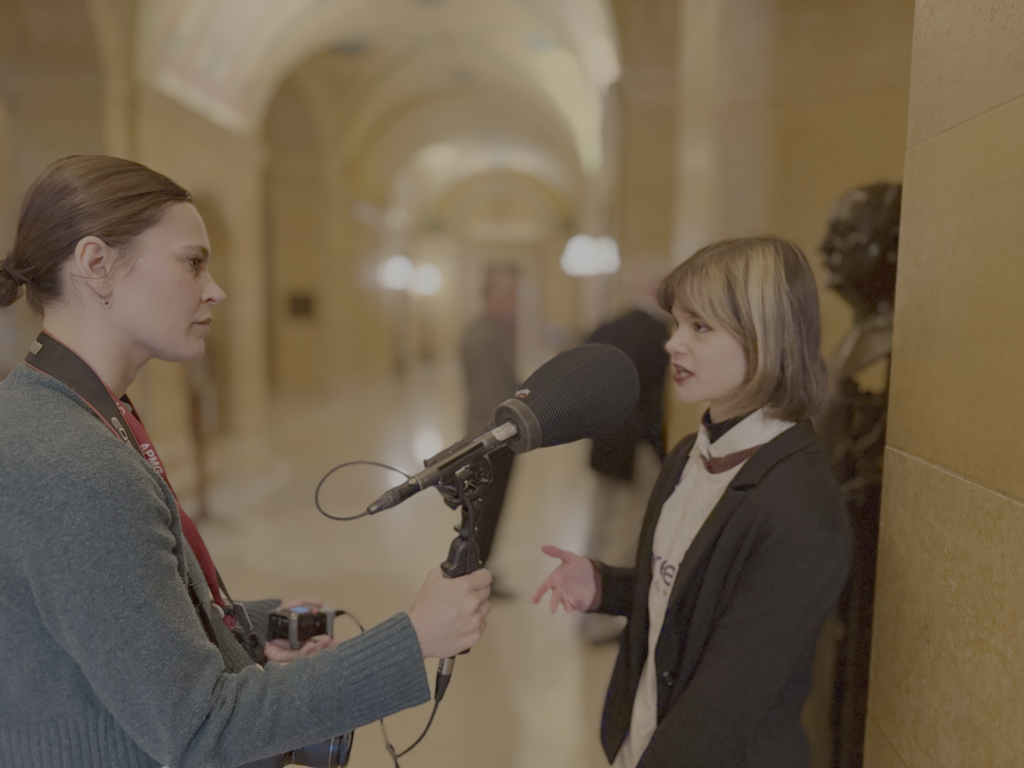
ThreeSixty Journalism student and Youth Leadership Board member Anais Froberg-Martinez spoke at the True North News Alliance Rally at the Minnesota State Capitol on Tuesday, April 7. We reproduced her remarks below.
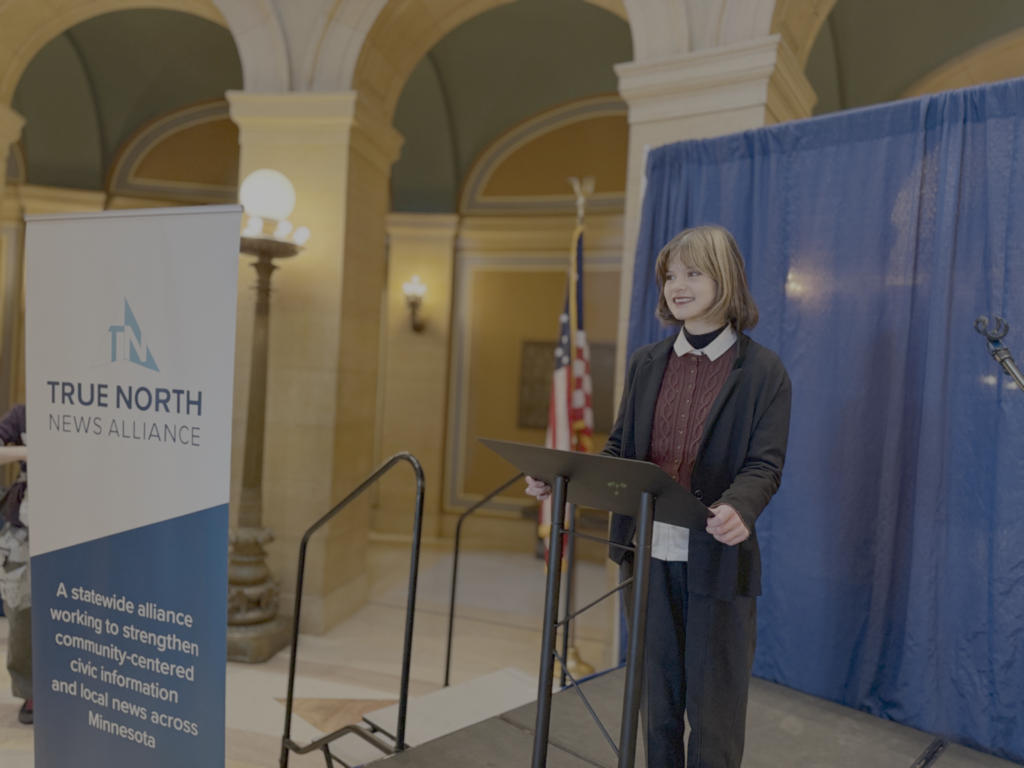
My name is Anais Froberg-Martinez, and I am a junior at Perpich Center for Arts Education, as well as the editor of the school newspaper, Lola Times. I am also on the youth board at ThreeSixty Journalism, an organization focused on teaching multimedia journalism skills to underrepresented youth voices. Through ThreeSixty, my reporting on media literacy education efforts has been published in the Star Tribune, and my commentary on a need for a reinvestment in student news programs has been published by MinnPost.
I’m here today because I believe that local journalism starts with student journalism. In order for young Minnesotans to see local journalism as essential community work, we need to teach them the accessibility and power in local news. And that starts with investments in media literacy and journalism education.
According to a 2024 study by the News Literacy Project, nearly half of teens (45%) think the press does more to harm democracy than protect it. Yet, according to the same study, only 40% of teens reported any media literacy instruction. 94% of teens believe their schools should be required to teach media literacy.
Teenagers want to do something about the flaws they see in national media organizations, but they are criticized as being distrusting of news. They haven’t been given the skills to see media creation as a tool to change the narrative, and much less introduced to the outlet of local news to foster this change. My school is a residential-optional, state-funded school, meaning that students all across Minnesota came with different experiences with school papers. Some students had never seen a school newspaper. One student expressed that she thought school newspapers were a myth of the Disney channel.
When the New Voices Law passed in Minnesota in May of 2024, I thought that removing longstanding censorship barriers would unlock a surge in student journalism participation. However, it became clear to me that the kind of censorship students are facing occurs much earlier: students doubt whether they can even do journalism. News reporting feels distant, uncertain, and weaponized. It leaves them feeling alienated.
I thought back to when I first started getting interested in journalism, two years ago. At the time, I saw my school paper was a stepping stone to “real” journalism: analysing important events at a national scale. However, as I gradually familiarized myself with local news, I began to realize that the hardest work is hyperlocal. Local news, alongside guided media literacy education, can teach students about creating democracy in a community-based, hands-on environment.
In October, I interviewed Rep. Cheryl Youakim for my commentary on the benefits of reinvestment in student journalism programs for local journalism. Rep. Youakim told me that securing funds for youth initiatives can be a long process. Luckily, youth media organizations such as ThreeSixty, and hyperlocal outlets mentoring youth such as North News in North Minneapolis, can show students the visible impact that local news can make. Legislation, such as the Civic Seal bill, establishes media literacy as an essential part of civic education. Although it may be a long journey, students have the power to make local news thrive. We just need to show them that they are journalists. Thank you.