By Kaya Williams, Xavier University
Additional reporting by Yunus Ahmed (Rosemount High School), and Legend Primus (Roseville High School)
Jason Lennox has spent weeks walking nearly every day with one goal in mind: to complete the entire Minnesota border, a journey of almost 1,800 miles.
He walks around 20 to 25 miles a day, hoping to finish in October. He sleeps and eats in a van along the way. The walk is an endurance challenge and an effort to raise money and awareness for children’s mental health while honoring those whose lives have been affected by addiction, mental illness and suicide.
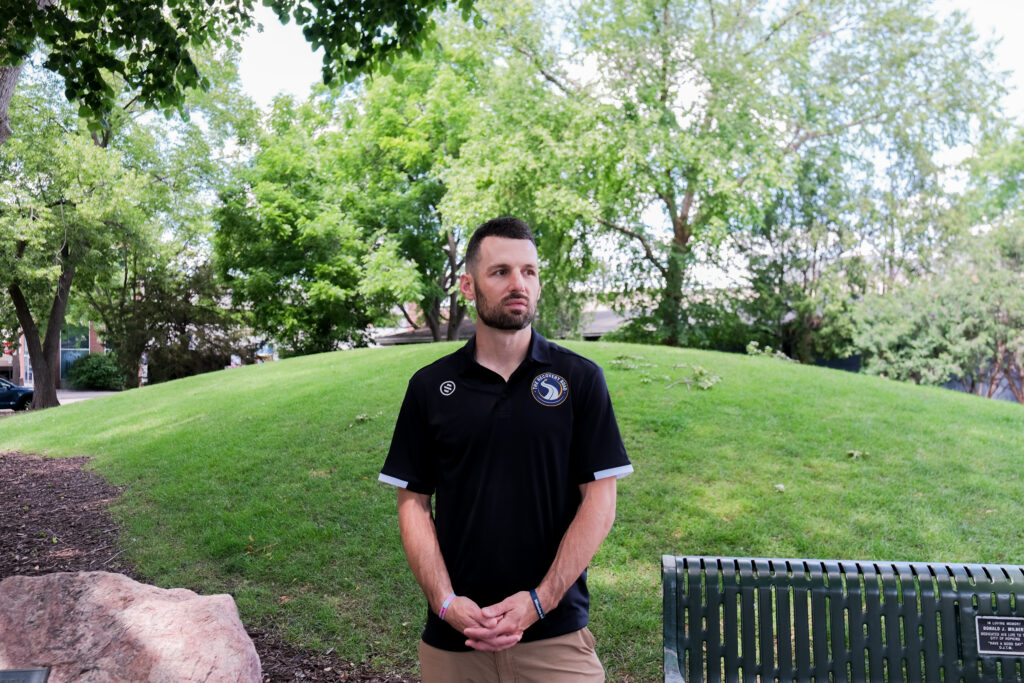
Lennox understands those struggles personally.
From age 12 to 24, he battled addiction while struggling with severe mental health challenges. Substances became an escape from thoughts he could not manage on his own. During those years, he damaged relationships, accumulated a felony record, and lived under the stigma that surrounds both addiction and mental illness.
“I went through my own struggles as a young child with mental health [problems] and not wanting to live and not wanting to be here,” he said. “When I was 12 and I started getting into drugs and alcohol, I realized pretty quickly that [substance use] was my relief.”
That relief eventually led him down what he described as “a really bad path.” His addiction culminated in an overdose, another trip to jail with the possibility of a lengthy prison sentence. Instead, he was transferred to a treatment program.
“When I got into treatment, I wasn’t really planning on a different life,” he said. “I didn’t think that was possible. Fast forward, here we are 15 and a half years later. It is possible.”
Today, Lennox has transformed his experience into a career of helping others. He is speaker, author, consultant and recovery advocate. He serves as CEO of One Arrow Group, a nonprofit organization that supports behavioral health programs across the country, and he is the author of the memoir A Perfect Tragedy. Through initiatives like The Recovery Road–his current effort to walk the perimeter of Minnesota–he works to raise awareness about addiction, mental health and the challenges people continue to face long after deciding they want to recover. His message is simple: recovery is possible.
But no one should have to do it alone. That belief is shared by Melissa Mikkonen, a licensed professional clinical counselor who works for Blue Cross and Blue Shield of Minnesota, which is sponsoring Lennox’s walk and the camp where this story was produced. She said community is one of the most important parts of healing.
“Nobody gets well alone,” Mikkonen said. “We all need community, and we all need help.”
Although recovery is often viewed as a personal choice, both Mikkonen and Lennox say the reality is far more complicated. Access to treatment, financial barriers, family support and community resources all influence whether someone begins or maintains recovery. Stigma surrounding addiction and mental health can prevent people from seeking help because they fear judgement or misunderstanding.
Mikkonen believes many young people today are struggling with what she calls the idea of “enoughness.”
“Am I smart enough? Am I man enough? Am I this enough?” Mikkonen said. “I think by talking about it more, by removing the stigma, and if young people can talk to other young people, that might be really helpful. Just not carrying those burdens alone.”
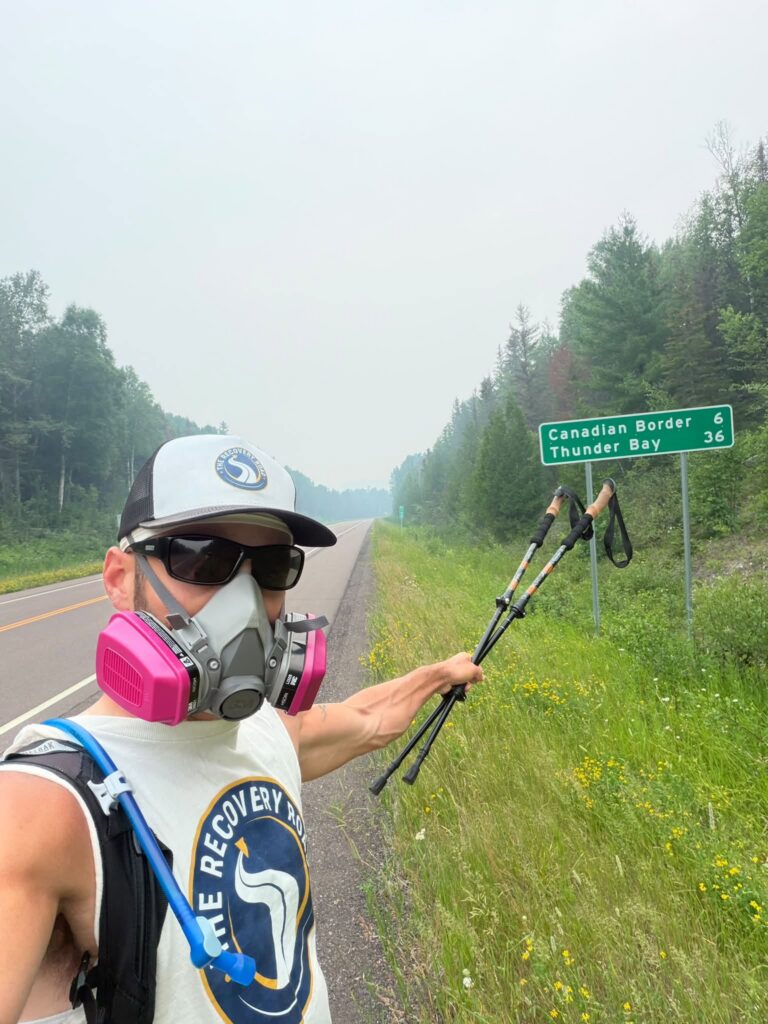
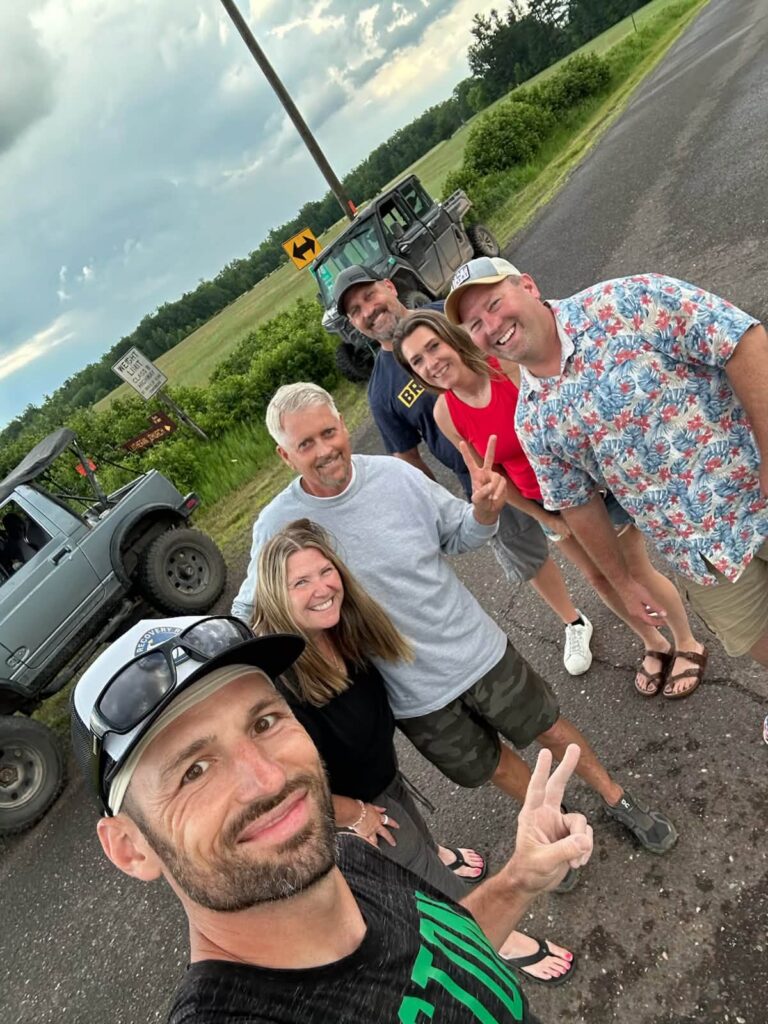
Those conversations have become central to Lennox’s mission.
“We all have demons,” he said. “We all have the things that we have to battle day in and day out. Having these conversations allows me to share a little bit, and then all of a sudden somebody goes, ‘Wow, that’s how I felt.’ Then they’re sharing with their people, and everybody realizes we’re not too unlike each other.”
Lennox said his walk was inspired by the hundreds of thousands of Americans whose lives are lost to mental health and substance use in the United States each year.
One of them is Kenzie Mae Leonardo, an 11-year-old from New Richland, Minnesota whose death by suicide in 2025 reminds him why conversation surrounding youth mental health cannot wait. He says every mile he walks serves as a tribute to her life and to countless other families who have experienced similar loss.
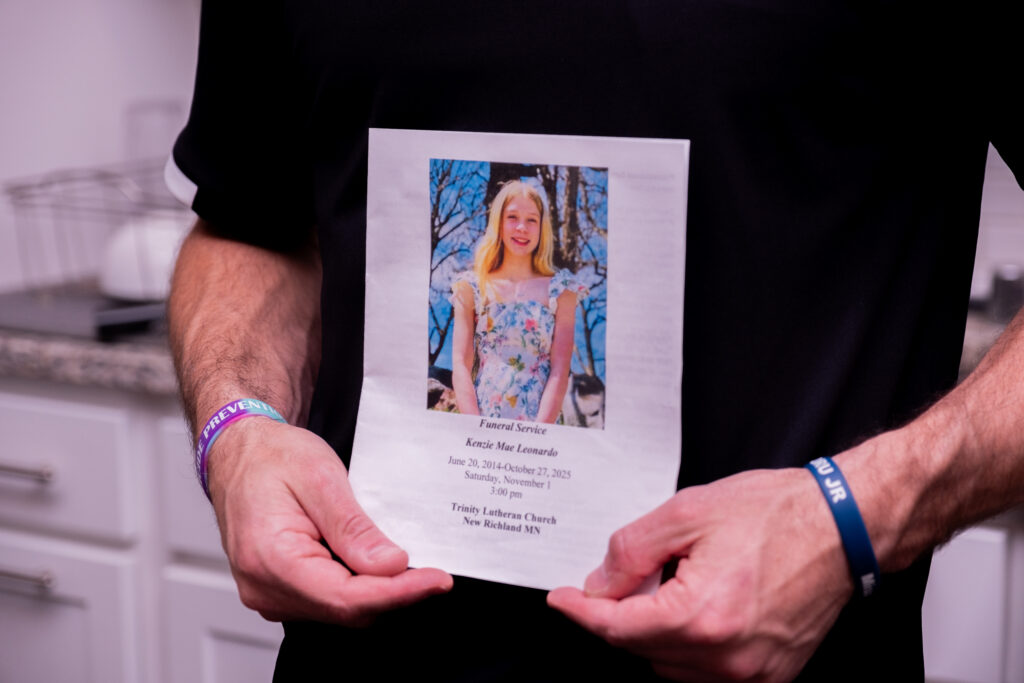
While awareness surrounding addiction and mental health has grown through social media, advocacy campaigns and public conversations, significant barriers remain. Many people continue to face long waitlists for treatment, high costs and limited access to care, as well as the lingering stigma attached to asking for help.
Organizations like Lennox’s One Arrow Group and counselors like Mikkonen hope to bridge those gaps by supporting behavioral health programs, promoting recovery resources and creating spaces where people can speak openly without fear of judgement.
For Lennox, recovery is about staying sober and helping others believe that change is possible and underscoring that healing continues long after treatment ends. His 1,776-mile walk around Minnesota is ultimately a reminder that recovery is not a straight path and that no one should ever have to walk it alone.
If you or someone you know is in crisis or if you’re thinking about hurting yourself, you can call or text the Suicide & Crisis Lifeline, 988, or find more resources here.
This story was produced by Minnesota teens through ThreeSixty Journalism’s 2026 Multimedia Storytelling Institute, funded by Blue Cross and Blue Shield of Minnesota, as part of its commitment to investing in community-led solutions, so everyone has the opportunity to achieve their healthiest life.
