By Anais Froberg-Martinez, Perpich Center for Arts Education, Asher Denkmann, Wayzata High Schoo land Justin Parnjan, Brooklyn Center High School
If it weren’t for an Instagram post, high school senior Mary Jensen would never have found herself testifying before the Minnesota Senate Education Policy Committee.
She had been scrolling on Instagram and came across a post by the YMCA Center for Youth Voice, inviting young people to be involved in a legislative initiative called the “Civic Seal.”
Curious about what the opportunity entailed, Jensen signed up, and her advocacy journey began.
On March 2, Jensen spoke to lawmakers in support of a proposal to create a “Minnesota Civic Seal,” a graduation credential for students who receive civics instruction in five areas, including media literacy. Students will be expected to complete a community-centered project and reflect on its “measurable civic impact.”
Before she was familiarized with the seal, Jensen experienced the intersection of technology and civics firsthand.
For Jensen, using her voice to advocate had “always been a part of her personality,” but she said there were limited opportunities for civic engagement at her private school, Cretin-Derham Hall High School in St. Paul.
She captained the debate team and participated in the YMCA’s Youth in Government; a program she said many students at her school had never heard of.
While social media connected Jensen with civic engagement opportunities, her peers were preoccupied with misinformation and cyberbullying.
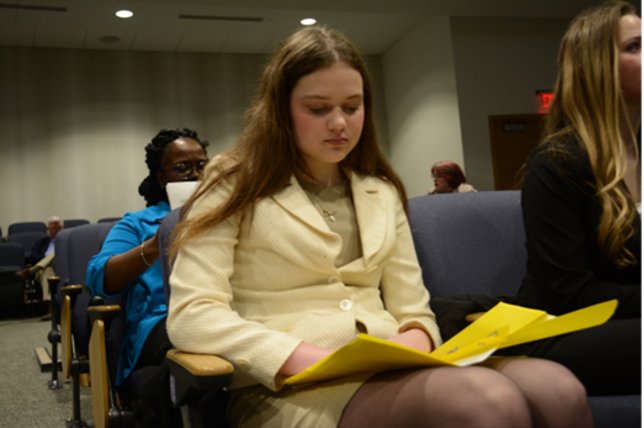
“A lot of the time people are like, ‘I read this source that said this,’ but that source is just a short Tiktok video clip that they saw,” Jensen said. “And it’s like, you didn’t proofread this. You did not evaluate if the source was correct.”
She added that problems occur when students don’t apply traditional fact-checking strategies to social media contexts: “if you do [get your news from social media], you should vet that source too.”
National polling data supports Jensen’s concerns around digital media literacy. 94% of teens believe their schools should be required to teach media literacy, according to a 2024 News Literacy Project study. The study also found that only about 40% of teens reported any media literacy instruction.
Media literacy is generally defined as the ability to critically analyze mass media content and evaluate the credibility of information and sources. Misinformation and intentional disinformation, especially on social media, are widely considered global challenges.
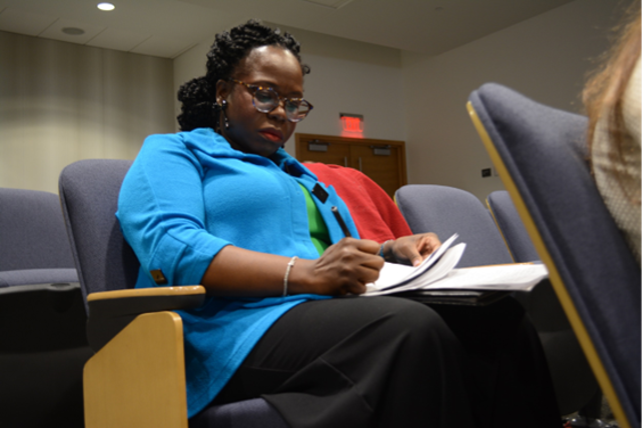
Conversations about these issues continued among students involved in developing the civic seal proposal. For many of them, including Jensen, adding a media literacy component was essential.
Senate Education Policy Chair and co-author of the Civil Seal proposal, Steve Cwodzinski, DFL-Eden Prairie, told committee members that federal spending priorities often favor STEM education over civics.
“For every $50 dollars we spend on STEM education, we spend five cents on civics education,” Cwodzinski said.
Advocates say media literacy programs face similar funding challenges.
Emma Larson, a senior at Wayzata High School, said schools and governments must improve media literacy education.
“I feel like they should play a bigger role compared to what they play right now,” Larson said. “Because they don’t really do anything.”
Lawmakers and advocates say competing demands for education funding make it difficult to expand media literacy instruction.
Sen. Mary Kunesh, DFL-New Brighton, said several media literacy bills in previous years have stalled because of funding concerns. The Civic Seal proposal attempts to address that issue by having the program administered through the YMCA Center for Youth Voice.
The Center will lead the Civic Seal Task Force that the bill proposes, which is composed of students and professionals who will review the Civic Seal guidelines.
With the help of Mike Dean, YMCA Center for Youth Voice Director, Jensen and other students created a progress and validity tracking app for Civic Seal participants.
The app will be “vetted by other high school students on the Civic seal board,” Jensen said, adding that the app factors into “why [the seal is] like zero-cost, because volunteers and students are doing all of the tracking basically.”
Last legislative session, the seal received a large fiscal note, illustrating advocates’ concerns that sustained funding for civics instruction and media literacy could be hard to come by.
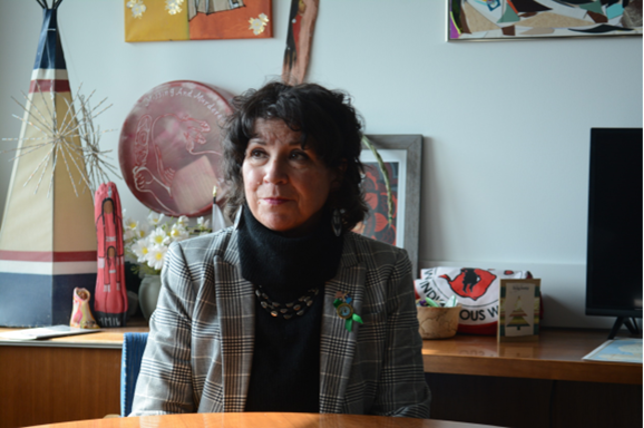
Sen. Kunesh said many public schools have not been able to hire staff necessary to provide basic guidance for students doing research.
“I would say the biggest barrier is not having library media specialists in the schools,” Kunesh said.
Some media literacy experts say school-based programs must be paired with efforts from local nonprofits and civic organizations
“Even if we do introduce media literacy in schools, who’s to say that isn’t going to get cut next time there’s a funding challenge?” said Kevin Kalla, a former film educator and current communications director at the youth music organization ComMUSICation.
Zachary T. Milford, University of Kentucky doctoral student who researched the Kentucky Civic Seal, said that the seal can empower students to take ownership of their learning while still in the classroom.
“[The seal challenges] the idea that we’re going to restrict what we teach students to a finite number of skills,’’ Milford said.
Instead, it encourages students to “lead the way and determine where they are going to take their research project.”
Time constraints within the school day present another challenge.
“There are so many pressures in the school day anyway on just getting through other state mandated standards,” said Connor Rohwer, a former youth worker in the Twin Cities who is currently getting his education license at the Harvard Graduate School of Education.
Milford said unlike Kentucky, which does not have officially recognized First Nations, the Civic Seal may face unique challenges in Minnesota where the state’s tribal communities and tribal contract schools may require additional consideration to ensure equitable access.
Despite these challenges, supporters say they are optimistic about the proposal’s chances in the ongoing 2026 legislative session. The Civic Seal bill has bi-partisan support, and is co-sponsored by Sen. Karin Housley, R-Stillwater and Sen. Julia Coleman, R-Waconia.
The bill passed the Senate Education Policy Committee on a unanimous vote, and advocates say it could become law.
“Regardless of where on the political spectrum you come from, you want people to be well-informed to have a working democracy,” said media artist and educator Jordan Lee Thompson, adding that his long-held statement is “no longer as obvious as it used to be.”
For Jensen, the Civic Seal strives to strengthen the link between media literacy and democracy. Its supporters maintain that it prepares future voters to navigate an increasingly complex media environment by embracing technology’s growing presence in civic education.
Now, Jensen manages the Civic Seal’s Instagram account, paying tribute to the role social media played in her involvement.
“Maybe we don’t want social media to be a huge aspect,” Jensen said. “But it still is.”
This story was produced as part of ThreeSixty Journalism’s 2026 Capitol Reporting Workshop for Minnesota youth, with financial support from the Saint Paul & Minnesota Foundation. Anais Froberg-Martinez, Justin Parnjan and Asher Denkmann worked with retired Star Tribune reporter Dane Smith to complete their story.
