By Graciella Victoria, DeLaSalle High School
Additional reporting by Muhammad Memon, Normandale Community College, and J’Angelo Moore, Jefferson High School
“Eric, you look good. Have you lost weight?”
A single compliment. Unassuming. And perhaps, with no idea of where it would lead.
In his 20s, this comment fueled Eric Pothen to work out at the gym constantly. Eventually, he got to a point where he was overexercising, undereating and in the depths of an eating disorder.
Pothen, now in his 30s and a resident of Albertville, struggled for nine years before he got better and became an eating disorder recovery coach himself. Pothen exudes a warm, smiling energy as he describes his road back to health and finding his mission.
As eating disorders continue to affect men of all ages, Pothen works to provide support, validation and treatment to males who are struggling to recover. His story raises a larger question: What’s pushing men today into unhealthy expectations?
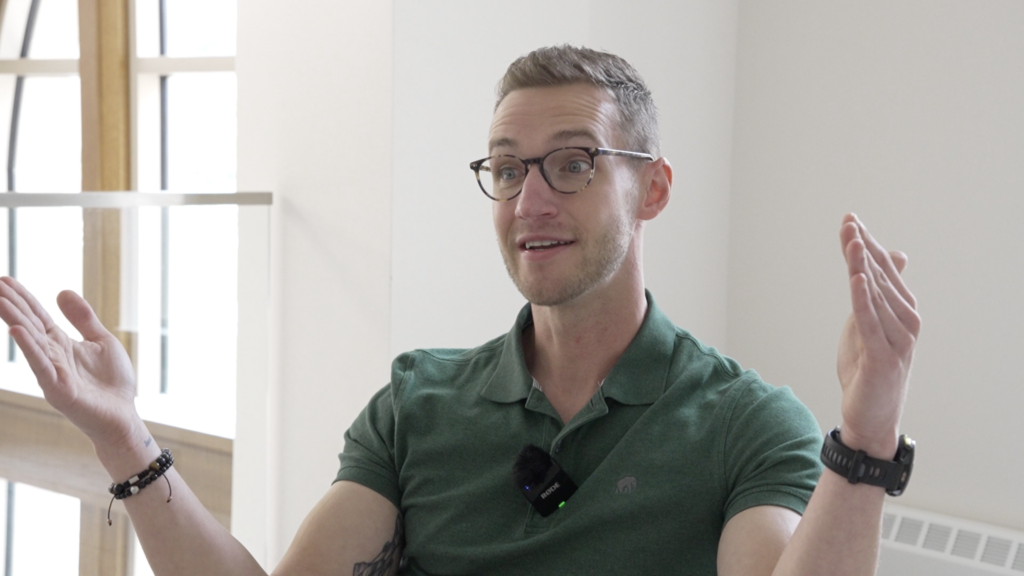
“There is a different language that we almost have to speak when we talk about eating disorders and body image and food and exercise with men,” Pothen said. “That’s because a lot of the language that we use right now relates to women.”
Media portrayals of eating disorders often focus on girls and women. However, eating disorders among boys and men have become more prevalent, and experts say they deserve just as much attention and care. Males with eating disorders may engage in harmful behaviors such as prioritizing protein while drastically limiting fats and carbs, using muscle-building drugs and dietary supplements, and excessively exercising.
Males represent about 33 percent of all individuals with an eating disorder, but they are only 5 to 11 percent of patients in clinical eating disorder treatment settings, according to the Child and Adolescent Psychiatric Clinics of North America. This means that the vast majority of males struggling with symptoms never receive an official clinical diagnosis or specialized care.
Dietitian Jillian Lampert, vice president of strategy and public affairs at The Emily Program, a Minnesota-based eating disorder treatment center, explains why men often don’t receive proper treatment.
“When males come in for care, a lot of the pieces that they say sort of prevent them from accessing care earlier relate to stigma or lack of awareness,” she said.
“They’re like ‘I thought this was sort of like a woman’s thing. I didn’t know that men could get eating disorders. I didn’t know if I could get help.’”
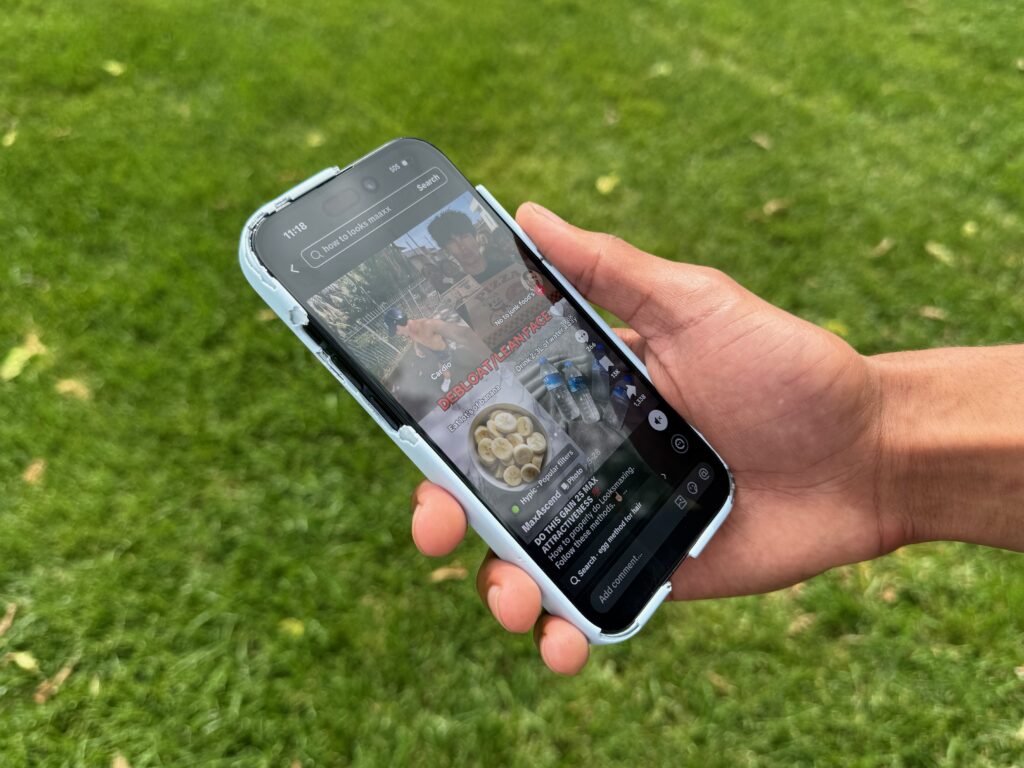
Lampert says that social media plays a significant role in encouraging unhealthy behaviors in male eating disorders.
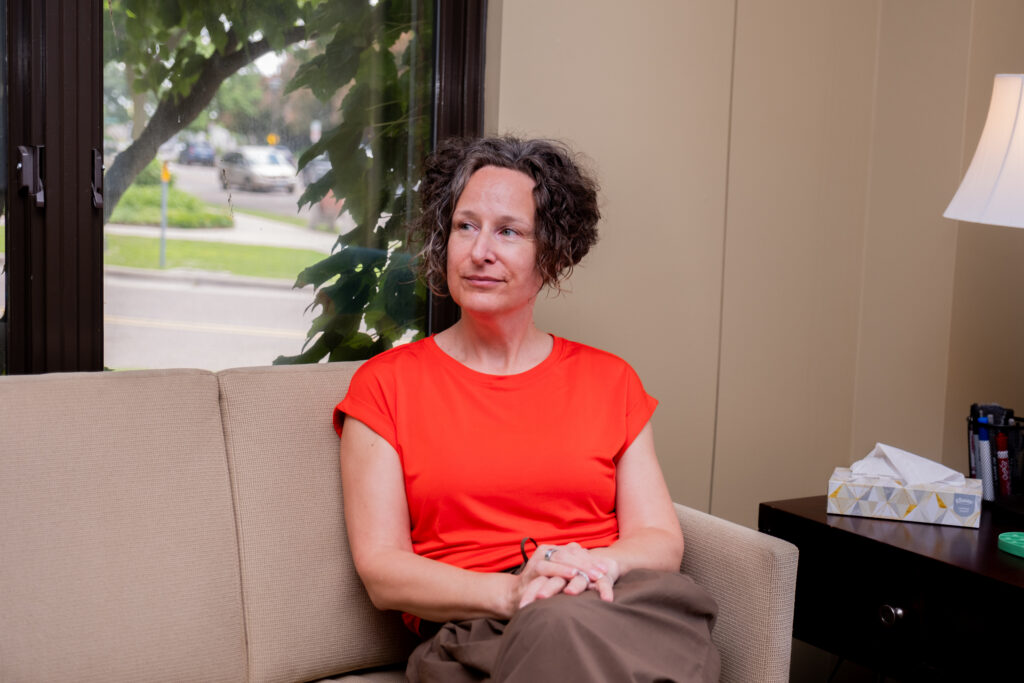
Mark Rennings, a homeschooled 18-year-old from the Twin Cities in recovery from an eating disorder, knows this firsthand.
“A lot of popular influencers sort of influenced me to buy certain products and do certain workout routines, just certain lifestyle choices that I wouldn’t have made without social media,” Rennings said.
He used to take ordinary vitamins and creatine and eventually went on to take peptides. At the height of his eating disorder, Rennings also started taking Adderall for weight loss.
“It kind of drove me to keep starving myself. …I just wanted to lose a bunch of weight because I felt really insecure,” he said.
He went from 250 to 160 pounds, which was “pretty frail” for him.
Health professionals note that eating disorders can affect people of any body size, and victims do not need to appear underweight to be seriously ill.
For Pothen, the issue of his eating disorder became real when one day his parents decided to confront him about his weight loss and behaviors. They told him that he either needed to start gaining weight or they would schedule a doctor’s appointment for him.
“That was the first time [they realized the disorder] in the years that I was struggling. I lived with this for multiple years, and I realized what I’m living with is actually something much larger than I’m picturing it to be,” he said.
Pothen chose to recover on his own, but it was difficult. “There was always that part of me that was like, ‘What if I actually had the courage to seek help?’ I want men to know that it’s okay to seek help if you are struggling with an eating disorder, because it’s real, it’s valid, and it’s something that you are living with.”
For males seeking recovery, support can look like opening up to a family member, finding a recovery coach or scheduling an intake at a treatment center, experts agree. Programs in the Twin Cities area include Melrose Center and The Emily Program.
For Pothen, finding support meant opening up to his parents and leaning on them for help in his journey. Pothen believes that the biggest challenge is helping males with eating disorders recognize that they have them and that they need help.
“With men, in particular, there’s a large hurdle that they have to jump over first before we can even begin to talk about the eating disorder in and of itself,” he said. “Once you kind of jump that initial hurdle with men, you’re going to be able to talk about some of those other important topics, like self-compassion and self-love.”
Pothen has the word “EMBRACE” tattooed on the inside of his upper arm. “The more that we can honor and embrace our story and our struggles, the less shame and guilt there will be on that road to recovery,” he said.
This story was produced by Minnesota teens through ThreeSixty Journalism’s 2026 Multimedia Storytelling Institute, funded by Blue Cross and Blue Shield of Minnesota, as part of its commitment to investing in community-led solutions, so everyone has the opportunity to achieve their healthiest life.
