By Lundy’N Jasper, Minnehaha Academy
Additional reporting by Wendy Xiong (Johnson High School) and Amiin Said (Eden Prairie High School)
Anna Powers was 10 when she used her first vape. She found it in her mom’s room while looking through jewelry. “It started as purely curiosity,” she said.
“I just kind of took it to my room, like figured out how to use it, used it a couple times and put it back.”
That was the beginning of a habit that Powers, who’s now 15, continues today. “Sometimes I’ll have like a little spike of energy, or I’ll just feel a little off. I don’t necessarily like it a lot, but it just kind of makes me feel a little jittery.” The high school student from St. Paul says she vapes because it’s all around her, and she turns to it when she feels sad or anxious.

Powers is not alone. According to the 2025 Minnesota Student Survey, 8% of Minnesota 11th graders vape, down from 25% in 2019.
Despite data showing that Minnesota teens are vaping less than in the past, many youth and public health professionals are concerned vaping is still a problem. While the numbers of young people vaping are down, dependency is up. Powers says she sees young people in her community vaping almost every day.
And the Minnesota Department of Health reports that e-cigarettes have become the most popular tobacco product among middle and high school students in the United States. More than 2 million of those students report that they use vapes.
Alex Eberhart runs the Smoke-Free Housing project for the Association for Nonsmokers-Minnesota (ANSR-MN). She says young people use these products to cope: “I would say the teens that I talk to that are using these products, they do look to these vaping devices and nicotine because of the stress they’re dealing with.”

Teens may vape to manage stress but use can lead to mental health challenges.
“Young people who might be diagnosed with anxiety or depression are more likely to use nicotine products or vape. So we want to advocate to kind of reduce that burden,” said Molly Schmidtke, who manages policy and technical assistance for ANSR-MN.
Powers said the people around her have struggled with vaping. She doesn’t judge them, but she feels sad seeing them stuck in a cycle of addiction.
“Sometimes I could say I’m trapped in a circle,” Powers said. “It’s not the same circle as, like, as vaping, but I think everyone has their own circles that they’re kind of trapped in.”
Eberhart sees this as well: “Then it just creates this cycle of dependence, and breaking that cycle can be really, really difficult.”
Research shows that social media plays a critical role in the cycle of nicotine dependence in youth.
Eberhart says social media makes it nearly impossible to avoid nicotine use. She said her TikTok feed is filled with “countless examples of celebrities and influencers using these products, who then youth, you know, look up to and are seeing every day on their feed.”
In addition to the influence of social media, experts say flavored vapes are another reason many young people are drawn to these products.
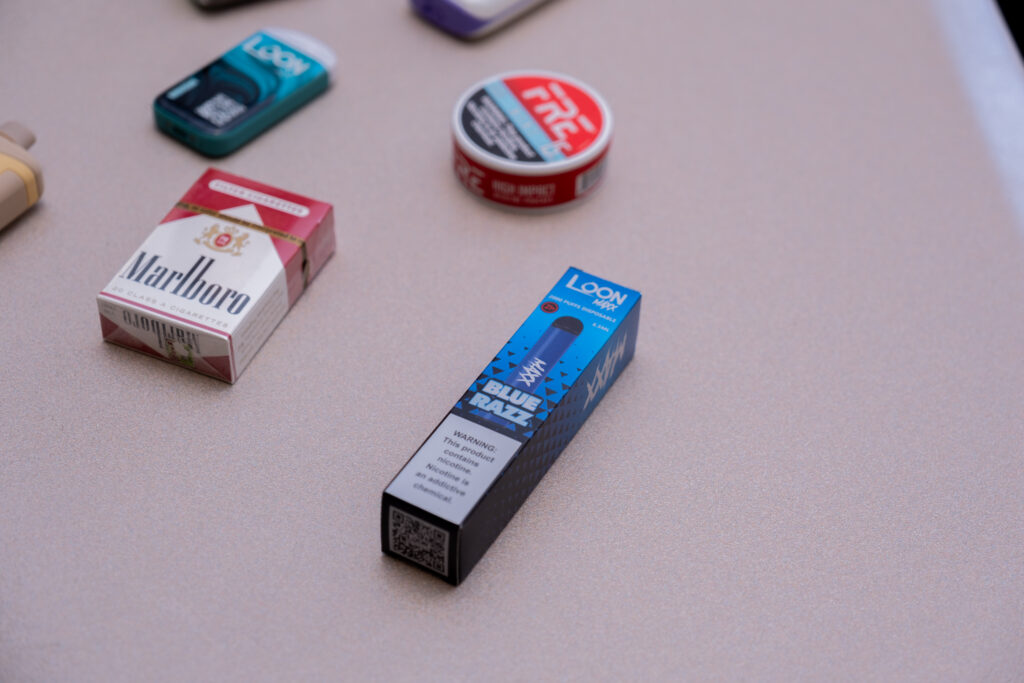
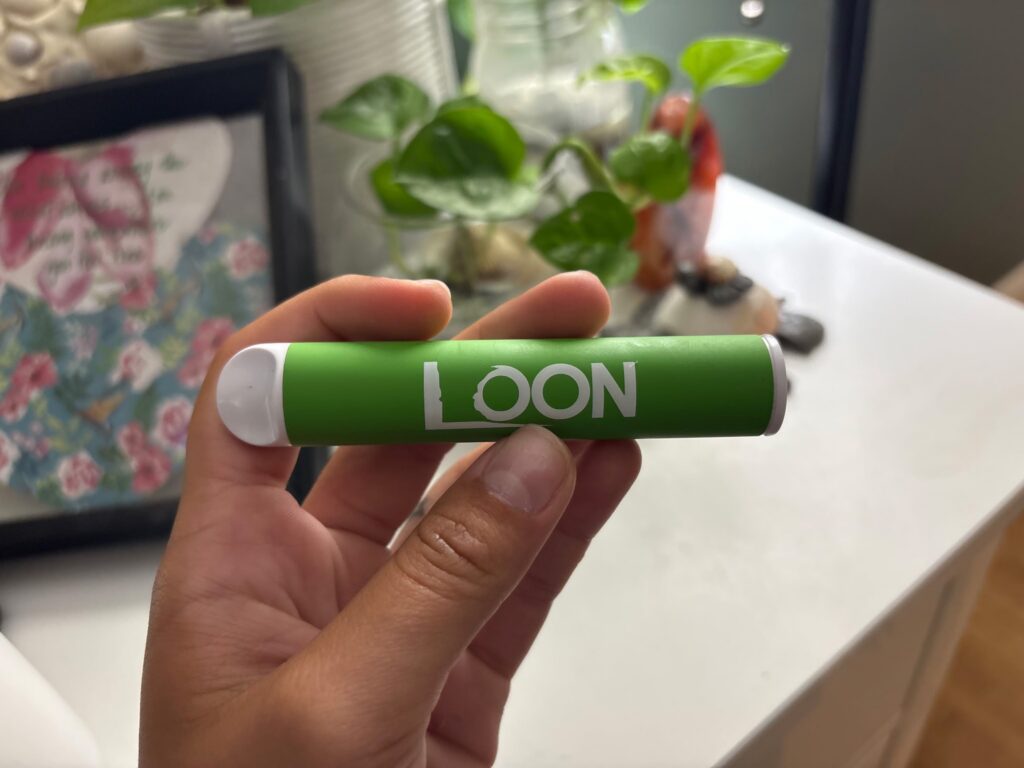
“My favorite flavor, I would say, is blue raspberry,” Powers said. “And you know that is like coming from my inner child because I like it because it’s like nostalgic, like blue raspberry slushies from the gas station.”
Powers says the flavors feel targeted to younger consumers and worries that they are hooking her friends.
Eberhart agrees. “It’s like walking into a candy store.”
Because of the concern that flavored products appeal to minors and lead to addiction, state lawmakers have taken action.
In 2024, the Minnesota Legislature passed a law prohibiting the sale and marketing of deceptive vapor products designed to appeal to minors. On July 15, state Attorney General Keith Ellison announced his office is suing e-cigarette manufacturer Loon for unlawful sales of flavored vapes, arguing they appeal to minors.
Municipalities have pursued similar action.
For its part, the vaping industry says it does not support marketing to minors and that vapor products are made for adult use only.
While flavored vapes may seem harmless to many teenagers, experts say the long-term effects have costs. U.S. data suggest e-cigarette use costs Americans $15.1 billion in healthcare spending annually.
Powers encourages young people to be cautious about vaping. “You don’t need to do it. You don’t need to waste your time. But if you’re going to, don’t feel shameful about it afterwards.”
“I need to be careful,” she said. “Because is this worth getting addicted to?”
This story was produced by Minnesota teens through ThreeSixty Journalism’s 2026 Multimedia Storytelling Institute, funded by Blue Cross and Blue Shield of Minnesota, as part of its commitment to investing in community-led solutions, so everyone has the opportunity to achieve their healthiest life.
